Google just ordered 890 megawatts of nuclear uprates at 11 reactors. The same turbine and transformer queue is now 15 percent of what America built in 20 years.
A 20-year Google PPA with Constellation funds $4.3 billion of upgrades across six PJM sites, six days after Amazon signed a 190 MW uprate at Calvert Cliffs. The binding inputs are turbines, generators, transformers and enriched fuel, and Brazil still sends uranium to Russia to cover part of Angra's fuel.

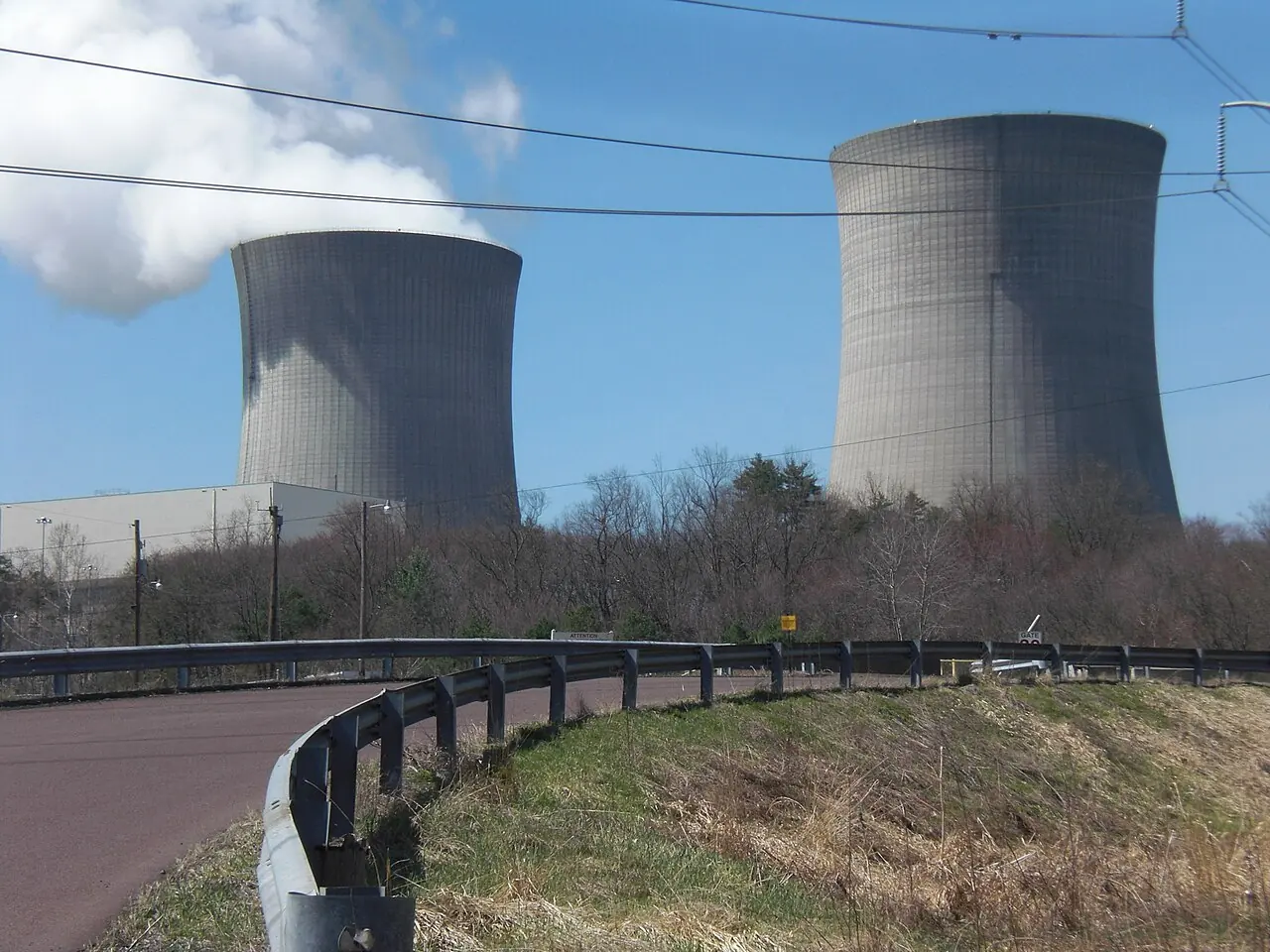
Google and Constellation Energy announced on October 6 a 20-year power purchase agreement that supports roughly $4.3 billion of upgrades at 11 nuclear units across six sites in Illinois, Pennsylvania and New Jersey, adding 890 MW of capacity [POWER Magazine, 6 October 2026]. The first uprate is expected in 2028 and the full 890 MW by the end of 2032 [Converge Digest, 6 October 2026]. A separate 15-year agreement covers 2,700 MW from Constellation’s existing PJM fleet.
This is the sequel to our September 25 piece on Georgia Power’s Vogtle and Hatch uprates for Google. That piece argued an uprate is a materials purchase, not a reactor. This one asks what happens when the template is applied at fleet scale.
What’s happening
- The deal. 890 MW of new capacity at Braidwood, Byron, LaSalle and Quad Cities in Illinois, Limerick in Pennsylvania and Salem in New Jersey, under a 20-year PPA [POWER Magazine, 6 October 2026].
- The price. $4.3 billion over 890 MW is about $4.8 million per MW of new capacity (desk arithmetic from POWER’s figures).
- The second deal in six days. On September 30, Constellation and Amazon announced a 20-year agreement for 690 MW from Calvert Cliffs in Maryland, including about 190 MW of new capacity arriving between 2030 and 2032, tied to more than $3 billion of investment across the 1,790 MW plant [Constellation, 30 September 2026]. The $3 billion covers plant-wide work, so it is not comparable per megawatt.
- The combined order. 890 MW plus about 190 MW is roughly 1,080 MW of announced new nuclear capacity from two hyperscalers inside six days (desk arithmetic).
- A software hook. The deal includes a five-year Google Cloud and Gemini Enterprise partnership covering site selection, power-flow modeling, permitting and asset health management [Converge Digest, 6 October 2026]. This is the only AI-model content in the announcement, and it is operational planning, not a materials claim.
The arithmetic that matters
The NRC’s current uprates page says that over the past 20 years its approvals gave the grid an additional six gigawatts of electrical capacity [NRC, page reviewed 15 September 2026]. Its fact sheet puts the cumulative record at 171 approved uprates and 8,030 MWe as of January 2022, about eight new reactors’ worth [NRC, January 2022 fact sheet].
Against those two baselines, 890 MW is about 15 percent of the 20-year six-gigawatt figure and about 11 percent of the 8,030 MW all-time figure. Add Amazon’s 190 MW and the two deals together equal about 18 percent of the six-gigawatt figure. These are desk ratios of unlike time windows: the historical figures are approvals over decades, while Google’s 890 MW is a six-year delivery schedule. The point is scale, not precision. Two customers have ordered, within six days, a sizeable fraction of what the whole industry delivered across two decades.
What the order is made of
The NRC states that extended power uprates “usually require significant modifications to major pieces of non-nuclear equipment such as high-pressure turbines, condensate pumps and motors, main generators, and transformers” [NRC fact sheet]. It also says that to raise output a utility will typically refuel with “either slightly more enriched uranium fuel or a higher percentage of new fuel.”
The announcements as reported do not include an equipment list for these 11 units, so which units need which components is not established. What the NRC statement does establish is the category of goods: heavy electrical plant and fuel.
That plant is already scarce. PwC analysts, cited in a Reuters Events report summarized by pv magazine USA, put lead times for large-capacity transformers at up to four years. Wood Mackenzie data in the same piece show generator step-up transformer demand up 274 percent and substation transformer demand up 116 percent from 2019 to 2025, with prices up roughly 80 percent in five years per Burns and McDonnell [pv magazine USA, 11 May 2026]. The article names limited grain-oriented electrical steel and copper as constraints.
Brazil angle
Fuel is where Brazil sits. INB’s Resende enrichment plant produced 70 percent of the average annual enriched uranium Angra 1 needs, according to Eixos in March 2025, a figure we could not re-confirm against a newer source today. For the remainder, INB contracted Rosatom’s subsidiary Internexco GmbH for conversion and enrichment of up to 275,000 kg of U3O8 from Caetité, with delivery in December 2027 at 4.25 percent enrichment [Eixos, 11 March 2025]. Correio da Manhã reported on August 19, 2026 that a June 2026 agreement raised the processing volume by 25 percent and that the arrangement is under scrutiny by the US government. The lesson for Brasília: a country with its own uranium and an enrichment plant still depends on a foreign enricher for the gap,.
US angle
Uprates let a hyperscaler add firm capacity without waiting in the new-reactor queue. The cost is competition for non-nuclear heavy equipment with every utility trying to connect load. Two uprate programs in six days means two more buyers in the transformer and turbine order books.
China angle
Goldman Sachs research dated March 26, 2026 reported that China’s transformer exports rose 61 percent year on year in January and February 2026, with shipments to the United States up 182 percent, and large power transformers above 10 MVA reaching 4.4 billion yuan in those two months [Tiger Brokers, 27 March 2026, citing Goldman Sachs]. The report does not say which customers received which units. The inference that US utilities are filling the equipment gap partly from Chinese factories is reasonable but unproven for these projects.
What it means
Hyperscalers are now buying the heavy-electrical supply chain directly. For the AI-materials thesis, the demand does not show up as a mining story first. It shows up as copper-wound, electrical-steel equipment orders and enrichment services, with the fuel-cycle bottleneck sitting outside the US and, in Brazil’s case, partly in Russia.
What to watch
- Constellation equipment orders. Any disclosure of turbine, generator or transformer suppliers for the 2028 first uprate, in Constellation’s next earnings call or NRC license amendment filings.
- INB and Rosatom. Whether US scrutiny reported on August 19 changes the December 2027 delivery under the Internexco contract, and whether CTMSP and INB sign a second phase for Resende.
- More copycats. A third hyperscaler uprate PPA in PJM before year end would confirm the template is spreading rather than being a Constellation special.