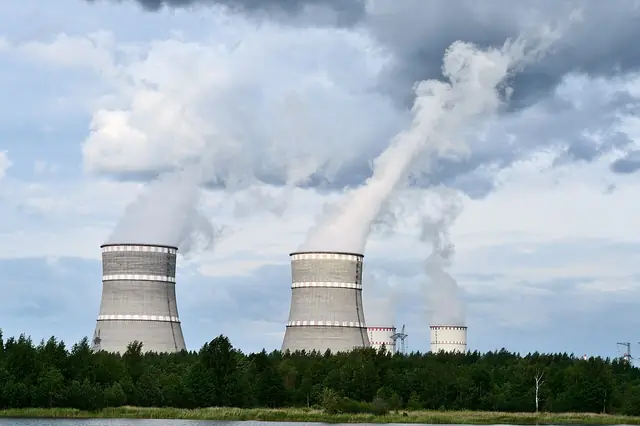
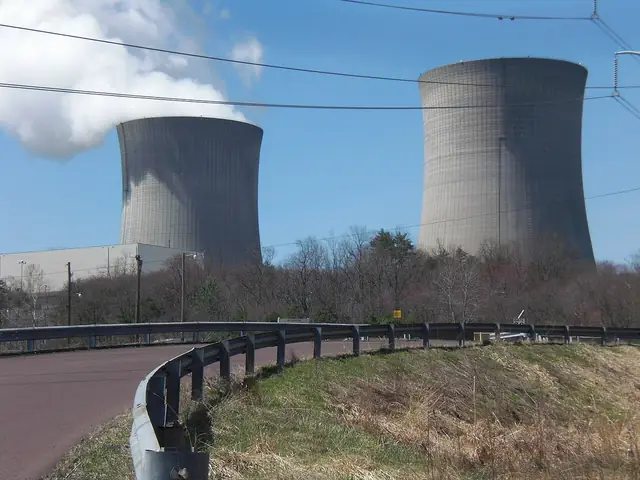
The cheapest new nuclear megawatt in America is a turbine, not a reactor. Google just subscribed to 96 of them.
Georgia Power filed a tariff on September 21 that lets a hyperscaler pay for uprates at Vogtle and Hatch and take the carbon credits. The physical order is turbines, pumps, motors and transformers. The whole half-century American uprate program produced 8,030 megawatts, less than Georgia Power's own six-year load forecast.

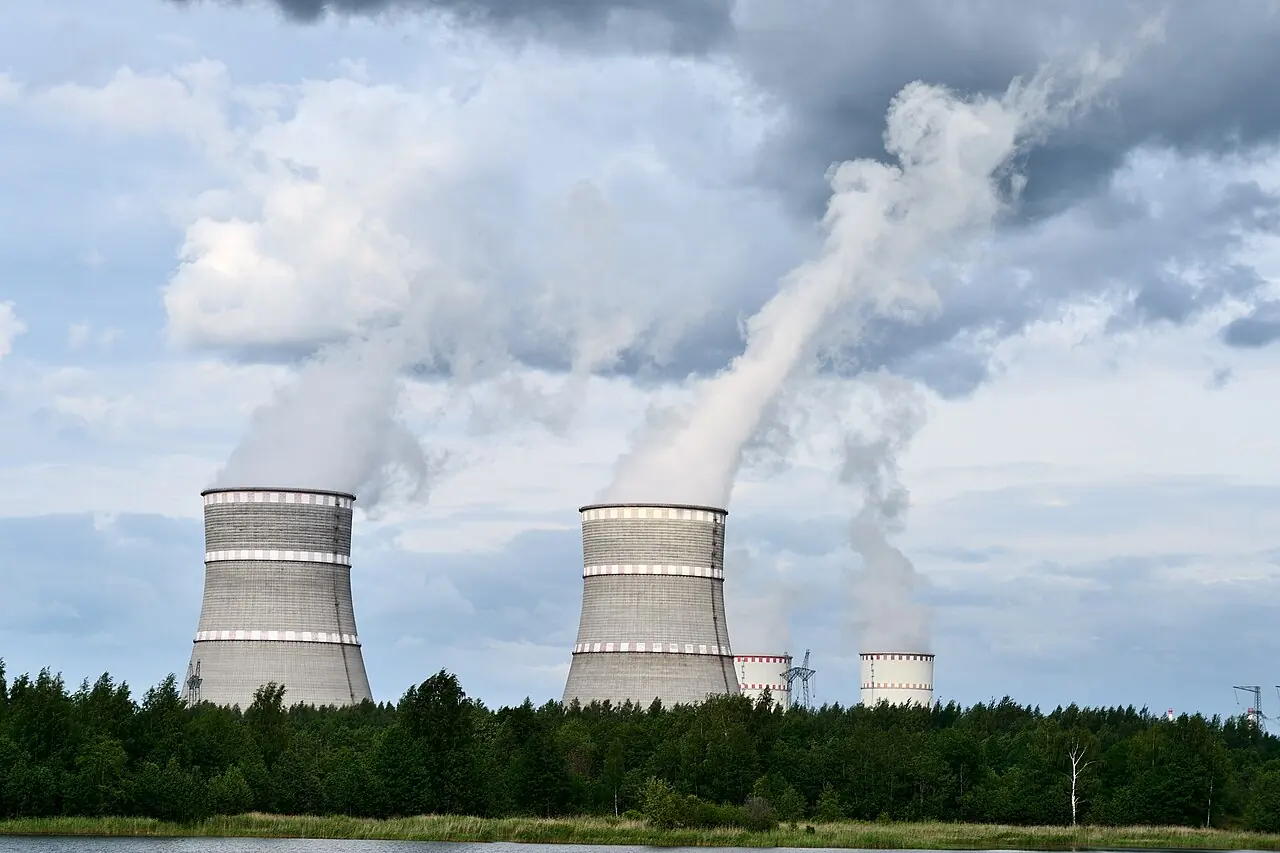
Georgia Power and Google announced on September 21 that Google will fund power uprates on Georgia Power’s owned portion of the nuclear units at Plants Vogtle and Hatch, adding roughly 96 megawatts of capacity to the grid [Georgia Power, 21 September 2026]. The filings went to the Georgia Public Service Commission the same day, in Dockets 44280 and 56002, and they carry something more consequential than the megawatts: a new Nuclear Uprate tariff, NU-1, plus a request to approve an extended power uprate for Hatch 1 and 2.
Read the mechanism rather than the headline. This is not a power purchase agreement. Google does not buy the output. Google subscribes to a tariff, funds the capital work, and receives the Zero-Emission Credits representing the carbon-free attributes of the incremental generation. The power goes to Georgia Power customers. Georgia Power says the structure protects non-participating customers from incremental costs related to the uprate work, and projects roughly $900 million in benefits to customers over the life of the units [Georgia Power, 21 September 2026].
That is a hyperscaler buying an attribute and paying for someone else’s capex: the cleanest example yet of the AI buildout financing utility hardware directly.
What’s happening
- Approximately 96 MW of new capacity across Georgia Power’s owned share of Vogtle and Hatch, subject to PSC approval [Georgia Power, 21 September 2026].
- The filing creates the NU-1 tariff and requests a new extended power uprate for Hatch 1 and 2. An extended power uprate for Vogtle 1 and 2 was already approved in Georgia Power’s 2025 Integrated Resource Plan [Power Engineering, 22 September 2026].
- Vogtle is a 4.5 to 4.8 GW site in Burke County near Waynesboro. Hatch is a 1.84 GW site near Baxley. Southern Nuclear operates both [DCD, 22 September 2026].
- In that same 2025 IRP, Georgia Power projected approximately 8,500 MW of load growth over the next six years, an increase of roughly 2,600 MW in peak demand by the end of 2030 against the 2023 IRP Update, citing projected data center demand among other factors [Power Engineering, 22 September 2026].
- Desk arithmetic: 96 MW is about 1.1 percent of that 8,500 MW. This is not how Georgia serves AI load. It is how Georgia serves the carbon accounting of AI load.
The physical order
An extended power uprate is a materials purchase wearing a regulatory costume. The NRC’s backgrounder is explicit. To lift output, a utility refuels with either slightly more enriched uranium or a higher percentage of fresh fuel, producing more thermal energy and more steam, and pipes, valves, pumps, heat exchangers, transformers and generators must accommodate the higher flows. Extended uprates, the NRC writes, “usually require significant modifications to major pieces of non-nuclear equipment such as high-pressure turbines, condensate pumps and motors, main generators, and transformers” [NRC Backgrounder on Power Uprates, dated January 2022, page reviewed 14 September 2026]. Georgia Power’s own description names turbines, pumps, motors and cooling systems [Georgia Power, 21 September 2026].
Every item on either list is copper, specialty steel, large forgings and transformer core stock. Nothing on either list is a reactor. The AI-nuclear trade here routes around the new-build queue entirely and lands on the same heavy electrical supply chain that is already the binding constraint on interconnection everywhere else. Google has not ordered a reactor. It has ordered rotating and electrical plant, in a market where that equipment is the scarce thing.
The fuel leg is smaller but real. More enrichment or more fresh fuel per cycle is an incremental call on the same enrichment capacity this desk flagged as the next bottleneck on 7 June, reading the Carnegie audit of hyperscaler nuclear PPAs. Uprates do not relieve that pressure. They add to it, quietly, without a groundbreaking.
The ceiling nobody is naming
Here is the number that decides how far this template can travel. As of January 2022, the NRC had approved 171 power uprates across the entire American fleet since the 1970s, for a cumulative gain of about 24,089 megawatts thermal, or 8,030 megawatts electric, which the agency describes as roughly eight reactors’ worth of capacity [NRC, January 2022].
Desk arithmetic, and it is worth sitting with: every uprate ever approved in the United States, across five decades, produced 8,030 MW. Georgia Power alone, in one service territory, forecasts 8,500 MW of load growth in six years. The entire historical uprate program is smaller than one utility’s near-term demand curve.
That is the ceiling. Uprates are real megawatts and they arrive faster than new construction, but at 96 MW per deal they will not close an AI-scale gap. What NU-1 actually is, then, is a financing template. If the Georgia PSC approves it, any hyperscaler with a clean-energy target and a balance sheet can fund utility capex and take credits in return, and other commissions will be shown this docket.
Brazil
Brazil cannot run this play, and the reason is arithmetic rather than policy. The uprate trick requires an installed fleet with margin inside it. Brazil’s nuclear expansion option is a single project that has been standing still for a decade. Angra 3 has been paralysed since 2015 at 66 percent complete, with roughly R$ 12 billion already spent. An updated BNDES study puts R$ 23.9 billion on finishing it, against an abandonment cost of R$ 22 billion to R$ 25.97 billion covering debts, contract terminations, demobilisation and the loss of what has already been sunk. Eletronuclear spends about R$ 1 billion a year simply conserving the equipment and servicing the financing. The TCU opened a procedure on 26 August to examine the project’s future, and Minister Alexandre Silveira said on 2 September that the government intends to bring a definition to the CNPE within 2026 [Brasil em Folhas, 2 September 2026].
Note what that comparison exposes. Georgia found 96 MW by upgrading turbines, funded by a private subscriber, on a timeline measured in refuelling outages. Brazil is deciding whether to spend R$ 23.9 billion to finish a plant it started in the 1980s, and the cheaper option on paper is not obviously the one that gets chosen, because walking away costs nearly as much as continuing. When Brazilian data center load arrives in volume, the answer will come from the interconnection queue this desk sized at 262 GW on 7 September, not from the nuclear fleet. There is no NU-1 to file.
China
China is not optimizing an old fleet because it does not have one. On 31 July a State Council executive meeting chaired by Premier Li Qiang approved eight more reactors: three pairs of Hualong One units at Jinqimen, Taipingling and Zhuanghe, plus two Guohe One units at Laiyang. CNNC noted that ten Hualong One units are commercially operational, with another 37 approved for construction [World Nuclear News, 3 August 2026].
The asymmetry is structural rather than financial. The United States is monetizing margin inside reactors built forty years ago. China is pouring concrete. Both are materials orders, for very different things, and only one of them scales.
What it means
The Tantalum AI Materials Index closed at 100.8 with the power sub-index at 105.2 and materials at 99.3, as of 19 September 2026. Power has been carrying the composite, and deals like NU-1 are why: the physical AI trade keeps migrating toward electrical equipment and away from the minerals themselves.
The deeper signal is institutional. A hyperscaler just paid for a regulated utility’s plant modifications and took an accounting credit instead of electrons. If commissions elsewhere accept that trade, the AI buildout stops being a customer of the grid and becomes a co-investor in it, with all the rate-case politics that implies.
What to watch
- Georgia PSC action on Dockets 44280 and 56002. The filing is pending, and the commission’s disposition of the NU-1 tariff, not the 96 MW, is the precedent. This is the same commission that cleared 3.2 GW for an OpenAI-linked load in August on a fully redacted contract, per this desk’s 27 August reporting. Watch whether NU-1 gets the same speed.
- The undisclosed ownership share. Every version of the announcement says “Georgia Power’s owned portion” and none states the percentage for the units being uprated. For Vogtle Units 3 and 4, Power Engineering reports Georgia Power owns 45.7 percent, with smaller shares held by Oglethorpe Power, the Municipal Electric Authority of Georgia and the city of Dalton [Power Engineering, 22 September 2026]. The units in this filing are Vogtle 1 and 2 and Hatch 1 and 2, and their splits are not given. Until they are, the gross megawatts added at the sites and how co-owners treat their own increment both stay unknown.
- The NRC license amendment for Hatch 1 and 2. PSC approval is not NRC approval. An extended power uprate needs a license amendment under 10 CFR 50.90-92, with a 30-day comment window and a 60-day hearing window after Federal Register notice [NRC]. Until that clock visibly starts, the 96 MW is a tariff, not a turbine order.