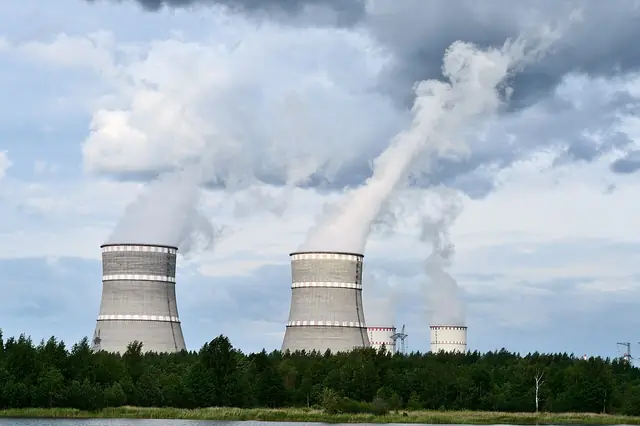
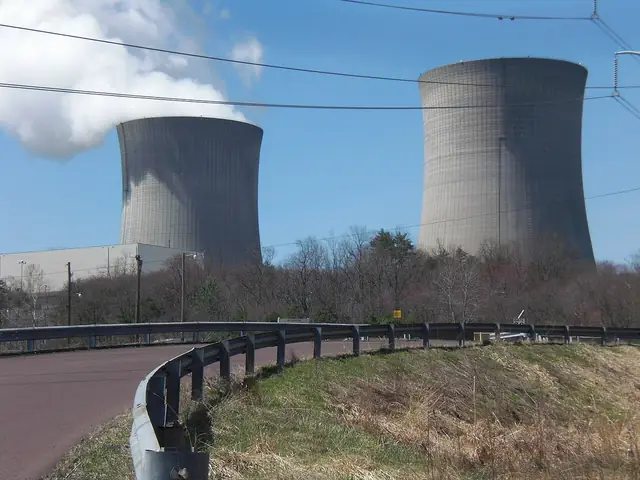
100 GW of gas turbine backlog. Three-year wait. The AI buildout rediscovers the F-class.
GE Vernova's gas turbine backlog hit 100 GW in Q1. Data center electrification orders alone ran $2.4 billion, more than all of 2025. New slots get delivered in 2029. The Williams-Meta Socrates plant just got cleared in Ohio on June 9. Gas is the lock-in.
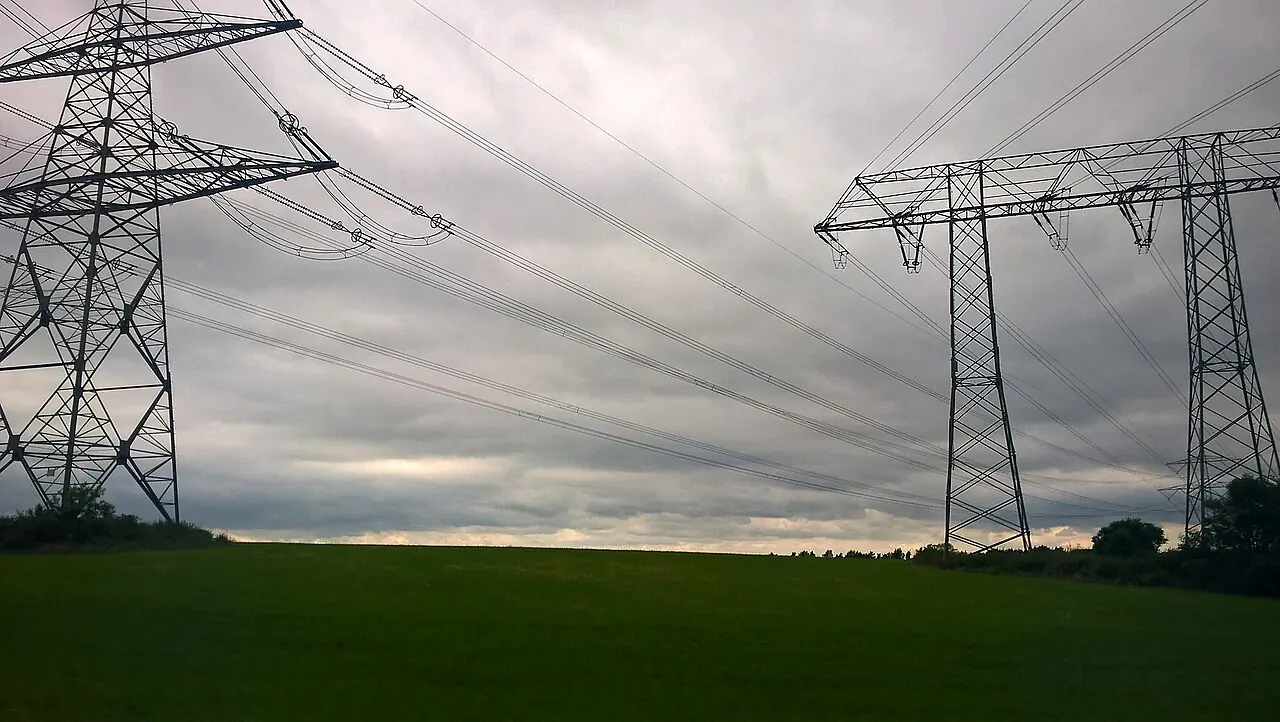
GE Vernova’s Q1 2026 8-K, filed April 22, reported a heavy-duty gas turbine backlog of 100 GW at quarter end, up 17 GW from year-end 2025. Electrification orders booked $7.1 billion in the quarter, roughly double Q1 2025, with the data center subset alone at $2.4 billion. That single quarter of data center equipment orders exceeded all of 2025. Management’s slide deck disclosed a delivery lead time of roughly three years and stated that the company is still booking 2029 and 2030 slots.
That is the lock-in. The hyperscaler nuclear PPA wave has been the story for eighteen months, but the Carnegie Endowment paper of June 2 audited every announced deal and concluded the megawatts on paper deliver less than 20 percent of projected AI data center demand even at full ramp. The arithmetic does not change. Nuclear takes seven to ten years to build. The hyperscalers need the watts in 2027. The clearance market for that gap is gas.
On June 9, the Ohio Power Siting Board approved Williams’ Project Socrates, a $1.6 billion, 200 MW behind-the-meter gas plant to be built and operated by a Williams subsidiary, with Sidecat LLC, a Meta affiliate, as the offtaker. It is one campus deal. There are larger ones already in the pipeline.
What’s happening
Meta’s Hyperion campus in Louisiana expanded to 7.46 GW of dedicated gas generation after Entergy agreed in late March to build seven additional plants on top of the original tranche. Microsoft signed a letter of intent for 1.4 GW of behind-the-meter gas in West Virginia and is in exclusive talks with Chevron and Engine No. 1 over a proposed 2.5 GW plant in West Texas. Apollo, on June 9, anchored a $35 billion capital solution for Broadcom’s AI XPV platform that bundles compute, networking, and power infrastructure into a single asset-backed structure targeting more than 20 GW of frontier-AI capacity through 2028.
GE Vernova expects to reach 20 GW of annualized gas turbine output by Q3 2026, with manufacturing expansion to 24 GW by 2028. That clears one and a half year of the current backlog if zero new orders arrive. Orders are still coming in.
The implications for the AI materials stack are mechanical. Heavy-frame gas plant builds pull copper through three main paths: the generator windings, the step-up transformer, and the substation and interconnection lines that tie the plant to the grid. Hot-section blade and vane sets in F and H class turbines consume nickel superalloys, with single-crystal sections that also use rhenium, alloy lines that aerospace demand is already pulling. Both consumption profiles compound the existing copper deficit narrative even though the Wood Mackenzie and ICSG forecasts cited in yesterday’s cobalt note already absorb the data center demand line.
Brazil
Brazil produced 7.2 billion cubic feet per day of natural gas in March 2026, an all-time high, up 23.3 percent year on year. Pre-salt associated gas is now the country’s structural growth source. Petrobras is allocating 60 percent of its 2025 to 2029 capex of $77.3 billion to pre-salt, with associated gas as a byproduct of the oil that funds the budget. The 2021 New Gas Law and follow-on regulatory work in 2024 opened third-party access to TAG and TBG pipelines, with TAG itself spending $5.2 billion on infrastructure upgrades. A private LNG terminal at Açu came online in October 2024 outside Petrobras’s orbit.
The gap is execution. Brazil’s gas grid is small. Henry Hub prints around $3 to $4 per MMBtu; Brazilian industrial customers pay $6 to $8. No major hyperscaler has yet announced a direct gas PPA with a Brazilian producer. The structural conditions are present (cheap upstream gas, growing pipeline access, private terminal capacity), and the political will (ANP, MME) is more accommodating to private deals than a decade ago. The missing piece is a first hyperscaler customer who treats Brazil as the offtake destination for surplus pre-salt gas rather than only the LNG export market. The desk’s view: a Microsoft or Google announcement of a behind-the-meter gas PPA in Pecém or Açu by end of 2027 would re-rate Brazil’s data center capex map.
United States
The US story is the bottleneck. Three-year lead times for new gas frames mean that a hyperscaler signing a fresh turbine order today commissions in 2029. The hyperscalers already in the queue have absorbed slot capacity through 2030. GE Vernova’s Greenville, South Carolina plant is the main domestic frame channel and is, per the company’s own Q1 disclosure, running to expand annualized output toward 20 GW by Q3 2026 and 24 GW by 2028. Both labor and hot-section component availability are cited by the company as the binding constraints rather than aggregate factory capex.
The bottleneck binds at three points: hot-section castings (high-temperature alloys), large power transformers (also backlogged), and skilled field assembly. None of these is solved by money alone in a three-year window. The behavioral response is the Williams-Meta Project Socrates model: have the turbine supplier (or an aligned IPP) build, own, and operate the plant, with the hyperscaler signing a long-dated capacity contract. The hyperscaler does not take turbine delivery risk. The IPP gets a guaranteed offtake.
DPA Title III dollars have funded some hot-section casting capacity expansion at Howmet and PCC. The DoE Loan Programs Office has a queue of behind-the-meter generation projects under its Title XVII authority. Neither program is moving at hyperscaler timelines.
China
China’s AI buildout is running on a different power architecture. Beijing’s announced capacity additions for 2026 lean on grid expansion (HVDC corridors, ultra-high-voltage transmission to consolidate western renewables and coal into eastern data center clusters) and on the country’s domestic gas turbine industry (Dongfang Electric, Harbin Electric, Shanghai Electric), which makes mostly licensed F-class frames under technology transfer agreements with GE and Mitsubishi from the early 2010s. Domestic production is captive. Export competitiveness for frontier H-class is limited.
The China read is structural rather than tactical. The US gas turbine bottleneck pushes hyperscaler timelines out, which is exactly the window China’s domestic AI infrastructure is using to scale. The Carnegie audit is bounded to US hyperscaler nuclear deals; the asymmetry framing here is the desk’s own read of what the US three-year turbine wait implies for the China competitor’s relative speed. The materials angle is rare-earth magnets (China at roughly 90 percent of global NdFeB output), which sit in EV traction motors, wind generators, and industrial motors, not in heavy-frame gas turbine generators, but those adjacent loads are still part of any data center build.
What it means
For investors, the trade is the IPP-with-aligned-turbine-supplier structure: Williams, Vistra, NRG, ENGIE in the US, with capacity contracted to hyperscalers. For builders, the trade is the gas plant slot itself, treated like silicon wafer capacity in 2024. For policymakers, the lesson is that nuclear-only narratives understate how much of the next four years of AI infrastructure runs on gas, and how badly the transformer and turbine queues bind. For Brazil, the trade is whether the country can convert “pre-salt gas is cheap and growing” into a single named hyperscaler PPA before the US bottleneck eases, which on current trajectory does not happen before 2029.
What to watch
- Mitsubishi Power and Siemens Energy Q2 2026 backlog updates, expected in late July. The hyperscaler share of new orders is the closely watched line.
- Williams, Williams Energy Partners, or Williams subsidiary follow-on filings at the Ohio Power Siting Board and Texas Railroad Commission for behind-the-meter generation. The Project Socrates template is the leading indicator of how many copies get built.
- ANP authorization filings (Brazil’s oil and gas regulator) for any private gas pipeline interconnection request linked to a named hyperscaler data center site. None exists yet. The first one is a structural signal.