Anglo and Codelco close the Los Bronces, Andina merger. The AI grid needed this copper.
After a September 2025 preliminary deal cleared antitrust and regulatory review, the two mines now run on one plan. 2.7 million tonnes of additional copper over 21 years, sized for a market the data centers are tightening.

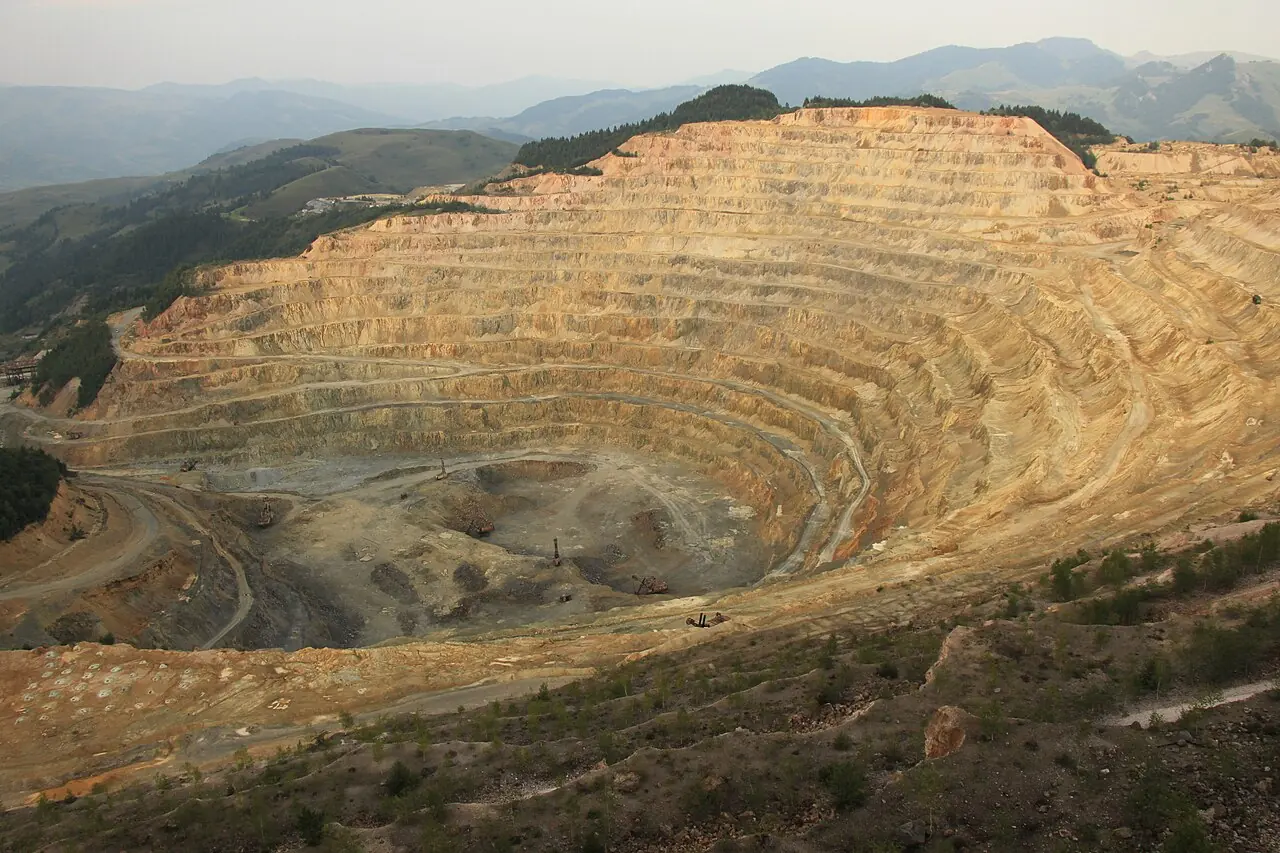
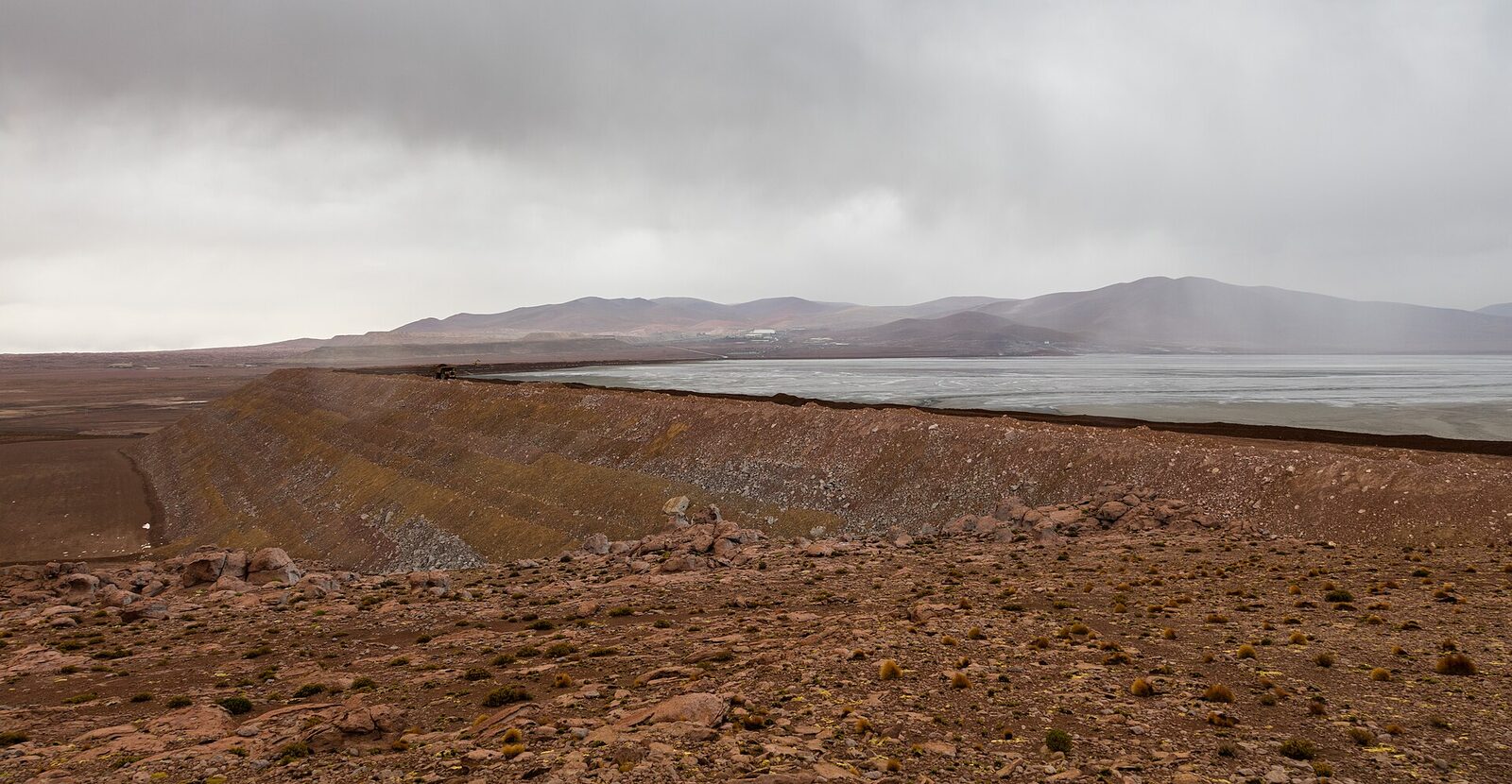
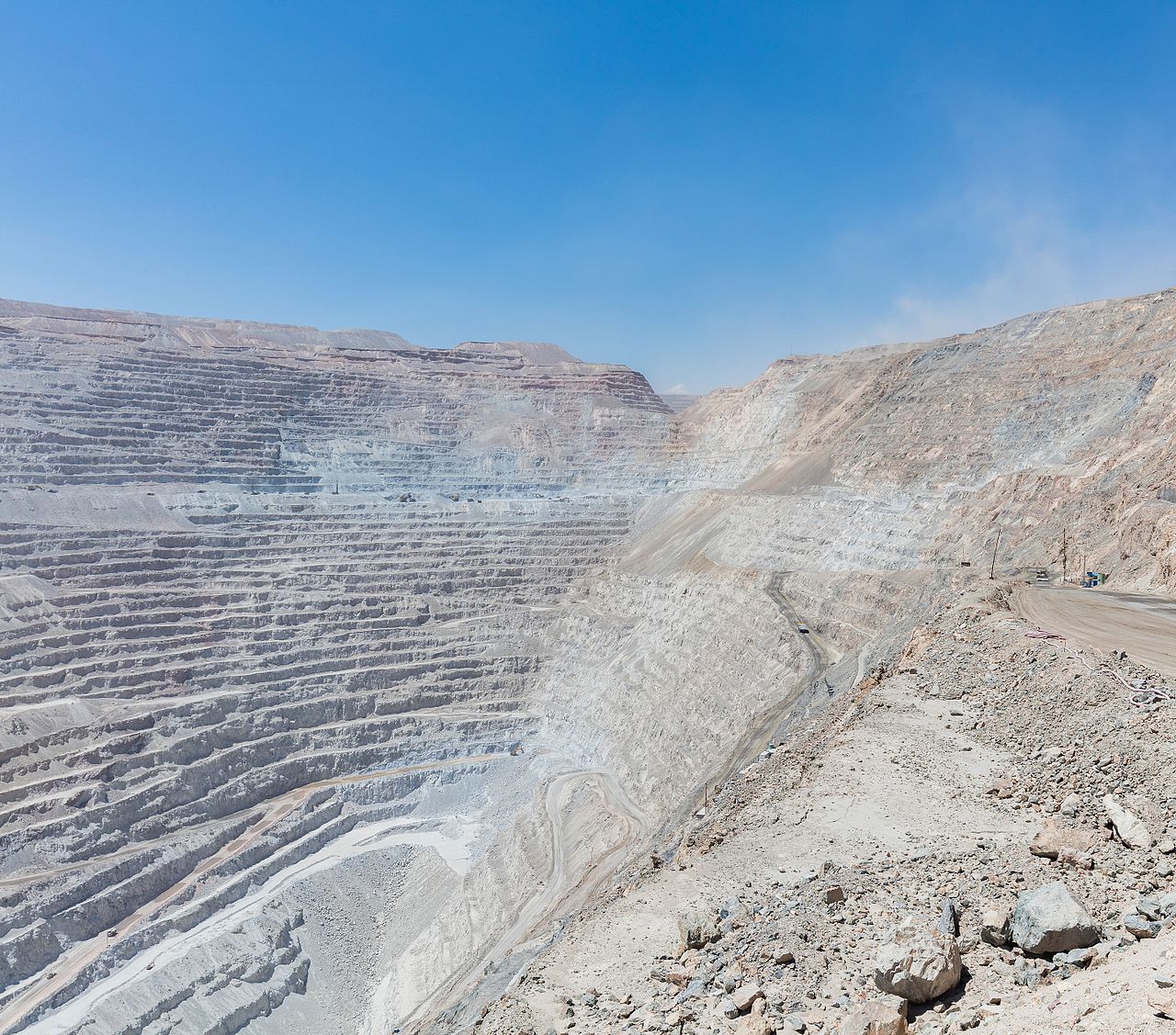
Anglo American and Codelco completed the definitive agreement on June 24, 2026 to implement a joint mine plan for their adjacent Los Bronces and Andina copper operations in central Chile, outside Santiago. The companies have cleared the competition and regulatory reviews and the conditions precedent that have been running since the September 16, 2025 preliminary agreement, and the unified plan now moves into the environmental-permitting phase, with full implementation scheduled for 2030 [Anglo American press release, 2026-06-24; Investing News Network, 2026-06-24].
The numbers are the headline. The integrated district adds an average of 120,000 metric tons of incremental copper per year, split equally between the two partners, and yields 2.7 million metric tons over the 21-year term. Anglo American and Codelco put the pre-tax value of the integration at not less than US$5 billion. The two companies retain ownership of their respective mines and the rights to develop standalone projects and underground resources independently. A jointly owned operating company runs the merged surface plan [Investing News Network, 2026-06-24; MINING.COM, 2025-09-16].
What’s happening
- The June 24 announcement is the closing of a deal first signed on September 16, 2025. The preliminary statement promised the same US$5 billion value and 2.7 million tonne uplift; the June 24 step is that all competition and regulatory approvals and conditions precedent have been completed [Anglo American press release, 2026-06-24].
- Both mines are material. Andina produced 181,600 tonnes of copper in 2024 and is one of Codelco’s smaller divisions; Los Bronces produced 172,400 tonnes in the same year and is a key Anglo American copper asset [MINING.COM, 2025-09-16].
- Final execution is contingent on environmental permits. The Los Bronces Integrated Project, the underlying expansion vehicle, was approved in 2023 after an earlier rejection over glacier and water-supply concerns, and ramp-up is scheduled to begin in 2027 [MINING.COM, 2025-09-16].
- Codelco Chairman Máximo Pacheco said the arrangement maximizes the potential of the district without major new investment. Anglo American CEO Duncan Wanblad framed the deal as support for Chile’s target of 6 million tonnes per year of national copper production by 2030 [Anglo American press release, 2026-06-24; MINING.COM, 2025-09-16].
- This is the second active Codelco consolidation play in the current cycle. Codelco’s separate US$2 billion restructuring plan combines Chuquicamata, Ministro Hales and Radomiro Tomic into a unified northern complex, targeting US$2 billion in combined cost and revenue savings by 2027 [Investing News Network, 2026-06-24].
The AI copper math, with one Chilean number
The reason this deal lands in an AI materials desk and not a generic mining-M&A column is the second-order math behind 120,000 tonnes per year. AI-oriented data centers require between 30 and 47 tonnes of copper per megawatt of IT power capacity within the facility itself, rising to roughly 100 to 150 tonnes per megawatt when associated grid infrastructure is included [Carbon Credits / industry reference; The Oregon Group]. Data-center copper demand is on track to average roughly 400,000 tonnes per year over the decade, peaking around 572,000 tonnes in 2028, with a cumulative installed base above 4.3 million tonnes by 2035 [BloombergNEF, August 2025, via MINING.COM and Bloomberg News]. An average annual contribution of 120,000 tonnes of incremental, low-cost copper from a single Chilean district is, in that frame, between a fifth and a third of global hyperscaler-driven demand at peak.
The integration also lands during a market that the structural copper bulls have been calling for two years. Copper crossed US$14,000 per tonne on the LME this year. It has since pulled back below US$6.00 per pound on a stronger US dollar and the Fed’s more restrictive stance under Chair Kevin Warsh, but the structural framing has not changed: ICSG and JP Morgan disagree on the 2026 deficit size (96,000 tonnes surplus per the April 2026 ICSG revision, 330,000 tonne deficit per JP Morgan), and Goldman is closer to the conservative side at an average US$10,710 per tonne for the first half [Trading Economics, 2026-06-26; ICSG forecast revision April 2026; JP Morgan Global Research; Goldman Sachs Research].
The Andean copper machine consolidates
Two consolidation plays running concurrently, both led by Codelco, signal that the Chilean state is using its sovereign optionality to underwrite the next leg of the country’s production curve. President José Antonio Kast’s administration, which took office in March 2026, has stated the 6 million tonne target on a faster track than Cochilco’s earlier projection of 2033, framing copper expansion as part of a 4% annual growth ambition [MINING.COM, Kast administration copper guidance, 2026]. Cochilco’s January 2026 production forecast had Chilean output reaching 5.97 million tonnes in 2027, with a midcycle dip to 5.43 million tonnes in 2030 before recovery to 6.06 million in 2033 [Cochilco forecast, January 2026, via OE Digital, Industrial Info]. Cochilco’s May 2026 update revised the trajectory down: Chilean production forecast at 5.3 million tonnes in 2026 (down 2.0%) and 5.5 million tonnes in 2027 (up 4.0%), with a small 12,000 tonne global surplus in 2026 widening to 153,000 tonnes in 2027 [Cochilco May 2026 update, via Kitco News and MINING.COM]. Aging ore grades are the binding constraint in both versions.
The deal essentially converts a permitting and head-grade story into a managed-district story. Codelco’s portfolio average copper grade has fallen from 1.02 percent in 2022 to 0.66 percent in 2025, and the company added only 0.3 percent to output last year [Investing News Network reporting on Codelco production, 2025-2026]. Integrating Andina with Los Bronces shares processing infrastructure, smooths waste-rock movement across the district boundary, and avoids the duplicate environmental review burden that has slowed Anglo’s standalone expansion since 2021.
Brazil’s copper position, by contrast
Brazil is not Chile in copper, and this deal is the kind of move Brazil cannot make. Vale’s Q1 2026 copper production was 102,300 tonnes globally, 13 percent above the prior year, with Brazilian operations contributing roughly 81,800 tonnes (Salobo 52,800 tonnes, Sossego 29,000 tonnes) [Rio Times reporting on Vale 6-K, 2026-04; SMM, 2026-04]. Salobo’s record quarter and Sossego’s planned 110-day SAG-mill maintenance in 2H26 set the ceiling on the near-term Brazilian copper response.
Brazil’s structural advantage in this lane runs through Vale Base Metals and through the BNDES–Vale critical minerals architecture rather than through district-scale consolidation. BHP signed a separate exploration agreement with Codelco on May 12, 2025 at the Bank of America Global Metals, Mining & Steel Conference for the Anillo prospect, a 24,000-hectare site in the Antofagasta Region; BHP committed up to US$40 million for exploration spend, and Brazilian capital is not part of that consortium [Codelco press release, 2025-05-12; MarketScreener; Mining Reporters, May 2025]. The Brazilian copper signal worth tracking in 2026 to 2027 is Vale’s Bacaba project advancing through public hearings and the broader Pará operations, not a Chilean-style district merger. The R$15 billion Sovereign Brazil Plan credit line presented to IBRAM in May targets mid-stream and processing, not large-scale base-metal mine consolidation [Discovery Alert / IBRAM, May 2026]. Brazil scales copper through Vale, not through a state-owned operator with antitrust standing equal to a major’s.
Washington’s missing tool, and China’s smelting leverage
For Washington, the deal is a reminder that the diversification trade outside China continues to be built by sovereign-adjacent producers in the Southern Hemisphere, not by the US balance sheet. The Pentagon’s announcements on June 25, 2026, the day after the Anglo–Codelco completion, were US Army base hosting for REalloys, Titan Mining, ioneer and Energy Exploration Technologies, plus a US$250 million Commerce Department investment in Robert Friedland’s I-Pulse Inc. for semiconductor components. Those programs are aimed at rare earths, antimony, lithium, and chip-making, not bulk copper [MINING.COM news index, 2026-06-25]. There is no comparable US copper consolidation underway; Freeport and Southern Copper run individually, and Resolution Copper remains permitting-locked.
For China, the read is on smelting and refining rather than mining. China’s treatment and refining charges (TC/RC), which fell to record lows in 2024 to 2025, are the structural lever by which Chinese smelters captured most of the value chain even as upstream consolidation moved to Latin America. A Chilean district managed for production volume tightens the concentrate market that Chinese smelters depend on; if Anglo and Codelco direct more of the Andina–Los Bronces concentrate flow to the Glencore-partnered Chilean smelter Codelco signed an MoU on earlier this year, the smelter-TC squeeze sharpens further [Mining-Technology, Codelco-Glencore Antofagasta smelter MoU coverage, 2026].
What it means
The Tantalum index read is clean. As of the May 22, 2026 weekly recalculation, the AI Materials sub-index TAI-M sits at 101.8 (up 1.9 percent on the week, 6.4 percent year to date), with copper as one of its anchor inputs; the Southern Diversification Index SDX sits at 96.1 (down 3.9 percent year to date) despite carrying both Codelco-adjacent Chilean exposure through Antofagasta and Vale’s Brazilian copper [Tantalum Strategy index data, indexes.json, 2026-05-22]. The equity market is pricing concentration premium (SOV50 at 118.9, up 14.6 percent year to date) but not yet pricing the Southern Hemisphere supply response. Both indexes have less than a year of live data and a backtest review is scheduled for the January 2027 anniversary; constituent weights are editorial and not optimization output [Tantalum methodology].
The deeper structural point: the Chilean state is using sovereign optionality to consolidate production at the moment the AI buildout needs the metal most, while Brazil scales copper through one major and the US has no equivalent lever. The 120,000 tonnes per year is not enough to close the structural deficit by itself. But it lands in the same quarter that the largest copper-producing country in the world is signaling it will press its advantage. If the Anglo–Teck merger advances on the same timeline, the early-2030s map of copper-mining concentration looks substantially different from today’s.
What to watch
- Environmental permits for the Andina–Los Bronces unified plan, late 2026 to 2027: Chile’s environmental review process killed the original Los Bronces expansion in 2021 and modified the 2023 reapproval. The permit decision sets the ramp timeline.
- The Anglo–Teck merger close, currently targeted late 2026: Quebrada Blanca + Collahuasi integration would create a roughly one million tonne per year copper complex, larger than Escondida by the early 2030s [MINING.COM, 2025-2026]. If that closes alongside Andina–Los Bronces, the structural map shifts in one calendar year.
- Codelco northern consolidation milestones through 2027: the Chuquicamata, Ministro Hales, Radomiro Tomic combination is the second Codelco district move. Disbursement and cost-saving milestones will tell you whether Codelco can execute on both fronts simultaneously.
- Vale’s Bacaba public hearings and Sossego 110-day maintenance window in 2H26: the only Brazilian counterpoint to the Chilean consolidation story this year, and the one to track if you want to see Brazilian copper move on the AI demand curve.