Google and Nvidia reopened a dormant 2014 trade group. The asset they bought was regulatory standing.
The AI Energy Management Alliance launched September 16 with three founders and eighteen launch partners, built on the shell of a demand response body that had gone quiet. It lobbies for flexible load in place of network upgrades. That is not a neutral swap: wires and flexibility order different materials on different decades.

This desk has spent September counting the gap between AI load and the wires to serve it. On September 7 the count was Brazilian: 26.2 GW in the connection queue against a single costed transmission package opening about 4 GW. The assumption in that piece, and in most coverage of interconnection queues anywhere, is that a queue gets cleared by building. This week the American industry organized around the opposite premise.
What’s happening
- Emerald AI, Google and NVIDIA launched the AI Energy Management Alliance on September 16 at 9:00 AM EDT, to advance “flexible AI data centers that are good citizens on the electricity grid, dynamically adjusting their power draw to provide relief during periods of peak grid stress” [Business Wire, 16 September 2026].
- The three founders were joined by eighteen launch partners: AES, Analog Devices, Anthropic, Calibrant Energy, Camus, ClearPath, Constellation, Encoord, Fluence, Generate Capital, GridUnity, National Grid, NRG, PassKey, RWE, Splight, Verrus and Voltus. Frank Lacey is Executive Director [Business Wire, 16 September 2026].
- AEMA is not a new organization. The release calls it “the next evolution of the Advanced Energy Management Alliance, founded in 2014.” Latitude Media, which interviewed the principals, is blunter: the 2014 body was “all but defunct,” and the relaunch exists to use its existing regulatory standing and long-standing relationships with the Department of Energy, FERC and state commissions [Latitude Media, 16 September 2026].
- “Today, the limiting factor for new digital infrastructure isn’t capital or silicon; it’s power,” said Tyler Norris, listed in the company release as Head of Advanced Energy Market Innovation at Google [Latitude Media, 16 September 2026; Business Wire, 16 September 2026]. DCD reports Norris will chair the board [DCD, 17 September 2026].
- The near-term target is FERC’s show cause orders of June 18, 2026, directing six RTOs and ISOs, PJM, MISO, SPP, CAISO, ISO-NE and NYISO, to justify or revise their large load interconnection rules under Section 206 of the Federal Power Act. One of the five reform categories FERC named is “flexible large loads and behind-the-meter generation” [McGuireWoods, 22 June 2026]. The regulator had already opened the door the alliance now exists to walk through.
- Note the calendar. The stakeholder deadline to comment on those show cause filings was September 16, the day AEMA launched [McGuireWoods, 22 June 2026]. ERCOT sits outside the six because it is not FERC-jurisdictional, and AEMA wants ERCOT’s own SB6 flexible-connection framework copied elsewhere [Latitude Media, 16 September 2026].
The substitution is a materials decision
Grid Strategies priced the status quo this week: US transmission congestion cost more than $17 billion in 2025, against $12 billion in 2024 and roughly $9.2 billion a year on average across 2016 to 2021. PJM carried $3.2 billion and ERCOT $2.5 billion [Latitude Media, 17 September 2026, citing Grid Strategies].
There are two ways to spend against that number, and they are not the same order.
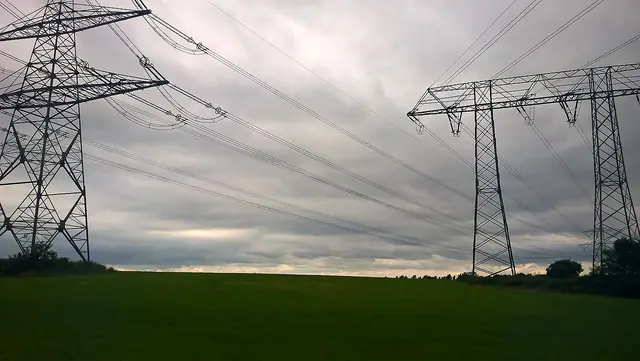
Wires order aluminum conductor, steel lattice, copper windings and grain-oriented electrical steel, on decade schedules. ERCOT’s Strategic Transmission Expansion Plan, approved in December 2025, runs several thousand miles of 765 kV line and is expected online in the early 2030s [Latitude Media, 17 September 2026].
Flexibility orders something else: lithium cells, power electronics, and software. FERC approved SPP’s use of topology optimization in August, a pure software reroute around congested lines, and a comparable MISO program saved that RTO $95 million in the first half of the year [Latitude Media, 17 September 2026]. Varun Sivaram, the Emerald AI CEO who originated the coalition, is deliberately agnostic about the instrument: AEMA is “narrow in the sense that we’re just doing flexible AI data centers,” he told Latitude, “but it’s broad in that we don’t mind how you do it,” naming generators, batteries and computational flexibility alike [Latitude Media, 16 September 2026].
For a materials desk that is the story. The same gigawatt of AI load, connected two ways, sends the order to two different supply chains on two different decades. AEMA exists to move the marginal gigawatt toward the second.
Brazil angle
Brazil has the mirror-image problem and none of this machinery. This desk reported on September 7, from EPE’s figures, that 26.2 GW of data center connection requests sat at the Ministry of Mines and Energy while the only studied, costed and recommended package was R$ 1.6 billion in São Paulo opening roughly 4 GW. EPE was already weighing faster substitutes in that study: dynamic line rating, FACTS devices, batteries and HTLS reconductoring.
What Brazil lacks is not the engineering concept but the regulatory vehicle. The American push has a statutory hook in Section 206, six RTOs under order, and now a dues-funded lobby with pre-existing FERC relationships. Brazil’s access rules are being written now, and the Redata energy-source portaria still carries no date. A flexible-connection category is far cheaper than the 1,848 km of 500 kV line this desk described in the Northeast package, and nobody is organized to ask for one.
US angle
The political timing is not comfortable. A New York Times poll released the day before launch found 61 percent of voters opposed to constructing AI data centers [NYT poll, 15 September 2026, as reported by Latitude Media, 16 September 2026]. This desk could not retrieve the poll document directly and carries the figure at one remove.
Flexibility answers exactly one strand of that opposition, the bill. NVIDIA’s Josh Parker put the cost-shift argument plainly: performance-based standards deliver “faster AI deployment and a more efficient grid, without asking ratepayers to fund new capacity” [Business Wire, 16 September 2026]. The alliance’s own launch coverage carried the limit: flexibility does nothing about water, land, noise or tax abatements [Latitude Media, 16 September 2026].
Note what AEMA is not claiming. Parker’s formulation is “making smarter use of what already exists, even as we build the new infrastructure we need.” This is a deferral and cost-allocation argument at the margin, not a case against transmission.
China angle
China is not running this experiment. State Grid plans to invest up to RMB 4 trillion, about $574 billion, in fixed assets across the 15th Five Year Plan covering 2026 to 2030, a 40 percent increase on the previous plan, and to build ultra high voltage direct current channels raising transmission capacity 30 percent against the end of the 14th Five Year Plan [SASAC, January 2026].
That is the wires order placed on a five year cycle, at national scale, ahead of the load. The United States is now organizing to place less of it. Both are rational given their institutions. Only one is a committed purchase of aluminum, steel and transformer core.
What it means
The desk indexes read TAI at 103.2, down 4.0 on the week, power at 106.2 against materials at 102.2, SOV50 at 112.8 and SDX at 101.1 [Tantalum indexes, updated 12 September 2026]. Power has carried the composite all quarter. This is the first organized attempt to bend that line down by not building.
Flexibility’s credibility is now an evidence question with a near date. The first data center designed for flexibility at scale is on track to come online before the end of 2026 in Manassas, Virginia, at 100 MW, and Nvidia and Emerald AI have run six demonstrations together. Google already reports a gigawatt of flexible load under management, which makes it the reference case RTO filings will cite [Latitude Media, 16 September 2026].
Treat the headline number with care. Norris, then at Duke, published a February 2025 paper finding that a small amount of data center flexibility could free up 100 GW of space on the US grid [Latitude Media, 16 September 2026]. That is a modelled finding, produced by the man now chairing the lobby that benefits from it, not a delivered result.
What to watch
- RTO responses to the June 18 show cause orders. Whether any of the six proposes a flexible-connection service class, rather than defending current tariffs, is the first hard test of AEMA’s influence.
- Manassas, before 31 December 2026. The 100 MW facility either energizes and curtails on grid signal this year, or the reference case slips and the filings lose their anchor.
- The Brazilian access season and the Redata portaria. Watch whether Pnast or the pending interministerial portaria creates any flexible or interruptible connection category. If Brazil writes its access rules around firm load only, it has chosen the 1,848 km answer by default.